


Can Tree Roots Damage Your Foundation, Driveway, or Plumbing in Florida

This is one of those things homeowners usually notice after something already looks off.
A small crack in the driveway.
A section of sidewalk lifting just enough to catch your foot.
A patio that does not sit flat anymore.
Or worse, plumbing issues that seem to come out of nowhere.
Then you look over at the tree nearby and start connecting dots.
Are the roots causing this
Is this going to get worse
Do I need to remove the tree
If you are in Seffner or nearby areas like Brandon, Valrico, Plant City, Riverview, Dover, Thonotosassa, or Mango, this is a very real concern. Florida conditions like fast growth, sandy soils, and heavy rain can all influence how roots behave over time.
Let’s break this down in a way that actually helps you figure out what is happening and what to do next.
First, most roots do not “break into things” the way people think
There is a common belief that tree roots aggressively break into foundations and pipes like they are searching for trouble.
That is not exactly how it works.
In most cases, roots grow where moisture, oxygen, and space are available. They tend to follow the path of least resistance, not force their way through solid, intact structures.
UF IFAS explains that roots need both water and oxygen and will grow where those conditions exist, which is why they often spread near the surface rather than deep underground. (gardeningsolutions.ifas.ufl.edu)
So the better way to think about it is this:
Roots usually take advantage of weak points.
They do not usually create those weak points out of nowhere.
Driveways and sidewalks are the most common problem
This is where most homeowners first notice root issues.
You may see:
Concrete lifting or cracking
Pavers shifting out of place
Walkways becoming uneven
Driveways developing raised sections
This happens because roots grow close to the surface and expand over time.
As they thicken, they push upward against anything sitting above them.
UF IFAS notes that roots near the surface can affect structures like sidewalks and driveways, especially when they expand under those surfaces. (gardeningsolutions.ifas.ufl.edu)
This is not usually sudden damage. It builds slowly, which is why many homeowners do not notice until it becomes a trip hazard or visible crack.
Plumbing issues are usually about existing weaknesses
This is where things get more serious.
Roots are attracted to moisture. So if there is a small leak in a sewer line or pipe, roots can find it and grow into it over time.
They are not breaking a perfectly sealed pipe.
They are taking advantage of a small opening that already exists.
Once inside, they can expand, block flow, and create backups or slow drainage issues.
That is why root related plumbing problems often show up as:
Recurring clogs
Slow drains that keep coming back
Gurgling sounds
Sewer backups
So if you are dealing with plumbing issues near large trees, roots are definitely worth considering.
Foundations are less commonly damaged, but it can happen
This is the part where people tend to worry the most.
Can tree roots crack your home’s foundation
In most cases, roots do not break strong, properly built foundations.
But they can contribute to problems in certain conditions.
For example:
If the soil expands and contracts due to moisture changes
If the foundation already has weak points
If roots are large and very close to the structure
If the tree is too close for its mature size
In Florida, soil movement plays a bigger role than direct root force in many cases.
Roots can influence how moisture moves through the soil, and that can affect stability over time.
So while roots are not usually the sole cause of foundation damage, they can be part of the bigger picture.
Trees planted too close to structures create long term problems
A lot of root issues start with placement.
A tree planted too close to a driveway, sidewalk, or foundation may not cause problems right away. But as it grows, the roots expand outward and upward.
Over time, that space runs out.
UF IFAS points out that roots spread widely and often stay near the surface, which is why proper spacing matters when planting trees. (gardeningsolutions.ifas.ufl.edu)
This is why a tree that looked perfectly placed when it was small can become an issue years later.
Sandy soil in Florida changes how roots behave
Seffner and surrounding areas often have sandy soil conditions.
This affects root growth in a few ways.
Roots may spread wider instead of deeper.
Water drains faster, which can influence how roots chase moisture.
Stability can depend more on root spread than depth.
This means root systems can extend farther across the surface than homeowners expect.
And that is why driveways, patios, and walkways are often the first places you see impact.
Signs tree roots may already be causing issues
If you are not sure whether roots are involved, look for patterns.
Cracks or lifting near the base of a tree
Repeated plumbing issues near tree lines
Uneven surfaces that seem to be getting worse
Visible roots near the surface pushing upward
Damage that follows the direction of root growth
One sign alone does not confirm it, but several signs together usually point to roots as part of the issue.
What not to do when you suspect root problems
This is where homeowners sometimes make things worse.
Do not start cutting large roots without understanding the impact
Do not assume removing visible roots solves the problem
Do not ignore repeated plumbing issues
Do not wait until damage becomes severe
Cutting roots without a plan can weaken the tree and create a fall risk.
So the goal is not just to fix the surface issue. It is to understand the whole situation.
When root cutting becomes dangerous
Roots are not just there to feed the tree.
They hold it in place.
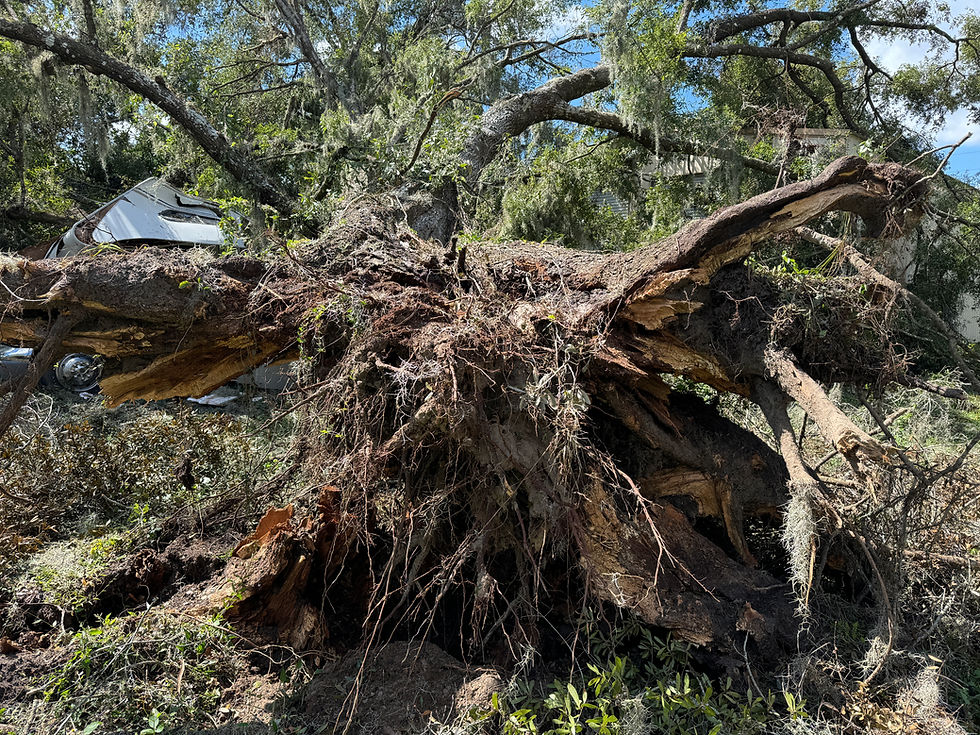
Cutting large roots, especially on one side, can reduce stability and increase the chance of the tree falling.
This becomes a serious issue if the tree is close to your home or another structure.
So any major root cutting should be done with a clear understanding of how it affects the tree’s balance.
What your options usually look like
Once root related damage is confirmed, the solution depends on severity.
Sometimes it is minor:
Adjusting hardscape
Grinding roots
Improving drainage
Light pruning
Sometimes it is more involved:
Root barriers
Structural adjustments
Selective root cutting with professional guidance
And sometimes:
The tree is simply too close or too large for the space, and removal becomes the safest long term solution
A simple way to think about it
Instead of asking “Are roots bad,” ask:
Is the tree too close for its size
Is the damage getting worse
Is the root system affecting something important
Is the tree still stable if roots are modified
That helps you look at the situation clearly instead of jumping to extremes.
Final thoughts
Tree roots are not out to destroy your property.
But they do follow moisture, space, and growth patterns that can lead to problems when trees are too close to structures.
In Seffner, where trees grow fast and soils shift with weather, those issues can show up gradually and then suddenly feel urgent.
The key is catching the pattern early and making the right decision before damage becomes expensive or dangerous.
Call to action
If you are seeing cracks, lifting, or plumbing issues near a tree, it is worth getting a professional evaluation to understand what is actually causing the problem before it gets worse.


Comments