


Preparing Your Trees for Hurricane Season in Seffner, FL: What to Do Now So You Are Not Panicking Later

If you have lived in Seffner for any amount of time, you know the pattern. The sky turns that familiar gray. The rain comes in sideways. The wind picks up. Then, suddenly, everyone is looking up at their trees like they are seeing them for the first time.
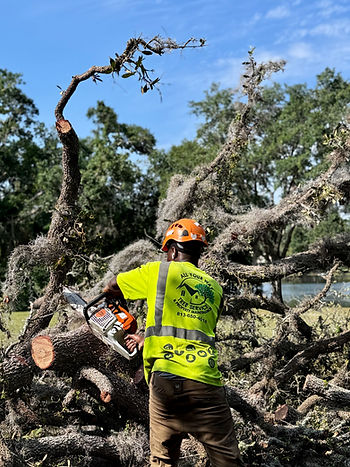
Hurricane season has a way of exposing problems that have been quietly building for years. A heavy limb that has always hung over the roof. Two trunks rubbing together with a crack you never noticed. A tree that looked fine until the soil stayed soaked for days and the whole thing started to lean.
The goal of this blog is simple. Help you prepare early, make smart decisions, and avoid the late night stress spiral when a storm is on the map.
This guide is written for Seffner and the surrounding areas like Brandon, Valrico, Plant City, Riverview, Dover, Thonotosassa, and Mango because Florida trees and Florida weather behave differently than most of the generic advice you find online.
The biggest mistake homeowners make before storms
Most people wait until a storm is a few days out to “handle the trees.” That is when trimming companies are booked. Emergency calls are stacked. Everyone is rushing. And rushed decisions around trees are where injuries and property damage happen.
UF IFAS recommends pruning before hurricane season, and for trees larger than about 15 feet tall, hiring a certified arborist to do the pruning work.
The theme is clear. Do the thoughtful work early. Do not wait until you are watching spaghetti models at midnight.
What storm ready tree prep actually means
A lot of homeowners think storm prep means stripping the tree down or removing as many branches as possible. That is not how you make a tree safer.
Storm prep is about reducing failure points while keeping the tree strong and balanced.
UF IFAS describes what a certified arborist typically does ahead of hurricane season, including removing dead branches, shortening overly long branches, addressing cracked limbs, shortening large branches that are competing with the trunk, and thinning the outer edges of the canopy rather than hollowing out the interior.
In plain language, the goal is to reduce leverage and wind load without weakening the tree.
Start with your own quick yard walk
Before you call anyone, do a calm walk around your property and look for obvious warning signs. You do not need tools. You just need to look closely.
Look up for these canopy red flags
• Dead limbs that are thicker than your wrist
• Branches hanging directly over your roof, driveway, or fence
• Cracks where major limbs join the trunk
• A canopy that looks thin on one side compared to the other
• Long heavy limbs that stretch far past the rest of the canopy
Look at the trunk for these clues
• Fresh splits in the bark
• Bark peeling in large areas
• Bulges that look new
• Old wounds that never closed and now look soft or dark
Look down at the base and soil
UF IFAS also advises paying attention to the ground around the tree and watching for sinking or rising soil and mushrooms growing from the base, which can signal underlying issues.
In our area, saturated soil after days of rain is a big deal. If the ground is lifting on one side or you see gaps forming around roots, that is not something you ignore.
What you should prune before hurricane season
This is where homeowners usually want a checklist. Here is a practical one, based on what UF IFAS says certified arborists focus on when preparing trees for hurricanes.
1. Remove dead branches first
Deadwood is one of the most common things that breaks off in wind. It also turns into flying debris fast.
2. Shorten overly long branches
Long limbs act like levers. In wind, they whip and create stress at the branch union. Shortening reduces leverage.
3. Address cracked branches immediately
A cracked limb is already in the process of failing. Wind just finishes the job.
4. Thin the outer canopy edges, not the interior
This surprises people. Many homeowners think you should thin the inside heavily. UF IFAS guidance emphasizes thinning the outer edges rather than stripping the interior, which helps reduce wind resistance while keeping structure.
5. Make sure young trees are being structurally trained
UF IFAS notes that young trees need structural pruning more frequently until maturity.
If you have newer trees on your property, hurricane prep is not just about this year. It is about shaping the tree so it grows strong for the next decade.
What you should not do, even if it feels productive
There are a few actions that homeowners do with good intentions that can make storm damage more likely.
Do not over prune to raise the canopy right before storms
Removing too much canopy can shift weight distribution and stress points. It can also stimulate fast weak regrowth.
Do not top trees
Topping is when a tree gets cut back to stubs. It creates weak regrowth and increases decay risk, which can make future failures more likely. UF IFAS has clear resources warning against harmful pruning practices, and their hurricane prep guidance emphasizes proper pruning by qualified professionals rather than extreme cutting.
Do not damage roots
UF IFAS hurricane preparation documents warn that digging and root pruning can make a tree more likely to fall during storms and can increase disease issues.
If you are doing landscaping, installing a fence, building a patio, or moving soil around a tree before hurricane season, be careful. Root damage is one of those problems that shows up later, and later is usually during a storm.
Trees that deserve extra attention in Seffner and nearby neighborhoods
Not every tree needs the same level of concern. These are the situations where I would tell a homeowner to take prep seriously.
Large trees close to the home
If a tree is within striking distance of your roof, windows, driveway, or kids play area, your threshold for action should be lower.
Trees with multiple trunks that form tight unions
Trees with two leaders pushing against each other can develop structural weaknesses like inclusions and cracks over time. University of Florida hurricane related pruning research materials often point to structural issues as common failure points after storms.
Trees on the edge of property lines
If a tree is a boundary tree, it can be jointly owned and removal decisions can become complicated. UF IFAS Hillsborough County has guidance explaining how boundary trees work and why consent matters.
This matters in tight Seffner lots where branches extend over fences and neighbors have strong opinions.
Trees near overhead power lines
This one is not just about your property. It is a public safety issue.
Tampa Electric advises that only qualified tree contractors should trim trees, especially around power lines, and they provide a form to report limbs that may interfere with electric service.
If you are dealing with a service drop line to your home, Tampa Electric notes that the service drop is the responsibility of the property owner and recommends hiring a professional tree service, including coordinating disconnection scheduling when needed.
Also, the City of Tampa directs residents to contact Tampa Electric line clearance for trees on overhead power lines.
The takeaway is simple. If lines are involved, do not guess. Do not go near it with pruning tools.
A simple hurricane season tree prep timeline you can follow
Here is a realistic schedule that works for most homeowners.
8 to 12 weeks before peak storm months
• Schedule an arborist assessment for large trees
• Identify deadwood and structural issues
• Plan trimming before everyone else rushes
4 to 8 weeks before
• Complete recommended pruning
• Remove obvious hazards like hanging limbs
• Clean up yard debris so it is not projectiles later
1 to 2 weeks before
• Quick recheck after heavy rain
• Look for new lean, fresh cracks, or soil movement
• Make sure yard furniture and loose items are secured
UF IFAS hurricane prep reminders emphasize doing work well ahead of storm watches and warnings, not during the stress window.
What to do right after a storm passes
After the storm, the biggest risks are not always obvious.
UF IFAS Hillsborough County storm recovery guidance says safety comes first, stay away from downed utility lines, report them to the utility companies or 911, and never use pruning equipment near utility lines.
If you see hanging limbs, treat them like they could fall at any moment. A calm, professional assessment is safer than trying to handle it quickly yourself.
UF IFAS hurricane restoration materials also emphasize removing hazards and cleaning broken limbs first, and not doing major structural pruning immediately after the storm.
Frequently asked questions from homeowners in our area
Is it better to prune right before a storm
No. You want pruning done well before storm watches and warnings. Last minute pruning creates scheduling pressure and can lead to bad decisions. UF IFAS guidance supports pruning before hurricane season, not during the warning window.
Should I thin the inside of the tree so wind passes through
Not aggressively. UF IFAS guidance focuses on thinning the outer canopy edges and shortening overly long limbs rather than hollowing out the interior.
If my tree is near power lines, can my tree company handle it
Sometimes, but it depends on the situation and the type of line. Tampa Electric provides reporting tools and guidance, and the City of Tampa points people to Tampa Electric line clearance for overhead line issues.
What if my neighbor’s tree hangs over my roof
This is common in Seffner neighborhoods. UF IFAS Hillsborough County has guidance on property line trees and responsibilities.
Often the best first step is a calm conversation, plus an arborist assessment if the limb looks risky. If it is a true hazard, documentation becomes important.
How this blog connects to your next best step
If you are reading this and thinking, I should probably have someone look at my trees before the weather turns, that instinct is solid.
The most helpful approach is not guessing. It is getting a clear plan.
Helpful Links you can read more
Call to action
If you are in Seffner, Brandon, Valrico, Plant City, Riverview, Dover, Thonotosassa, or nearby, schedule a hurricane season tree check now while appointments are easier to get. A quick assessment and proper pruning can prevent a whole lot of panic later.
Free authoritative resources you can link to


Comments