


What To Check Before Building A Deck Near Mature Trees in Seffner

A new deck can completely change how you use your backyard.
Maybe you want a shaded place for a table and chairs. Maybe you are extending an
existing outdoor living area. Or maybe there is a beautiful mature oak in exactly the
spot where the deck would look best.
That tree can make the finished space feel great.
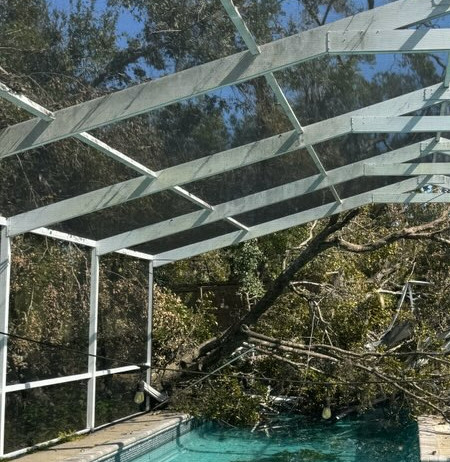
It can also make the project more complicated than it first appears.
The biggest concern is usually not the branches you can see. It is everything happening below the ground.
Before building a deck near a mature tree in Seffner, it is worth looking at the tree, the roots, the proposed footing locations, drainage, and how construction crews will reach
the work area. A little planning before the first hole is dug can prevent damage that
does not become obvious until months or years later.
Start With The Tree Before Designing Around It
If a large tree is going to become part of your new outdoor space, make sure it is
actually a tree worth designing around.
Look at the trunk and canopy.
Are there large dead branches? Does the tree lean heavily toward the proposed deck?
Are there cracks, cavities, mushrooms near the base, damaged roots, or sections of
canopy that appear to be declining?
A deck can last for many years. You do not want to build the entire layout around a tree
that may already have serious structural problems.
Having the tree evaluated through Certified Arborist Services before construction can
give you a clearer idea of what you are working with.
This is especially useful with large mature trees where the deck will be close to the
trunk or underneath substantial limbs.
Deck Footings Can Be A Bigger Problem Than The
Deck Surface
When homeowners picture a deck, they usually think about the boards, railings, stairs,
and furniture.
The tree is more concerned about what happens underneath.
Deck construction often requires digging holes for posts or footings. Depending on the
design, several of those holes may fall within the tree's root area.
Mature tree roots can extend well beyond the trunk, and many important roots occupy
relatively shallow soil. UF IFAS emphasizes protecting root systems during construction
and planning work around important trees before excavation begins.
Finding a large root halfway through digging a footing creates a decision that should
have been addressed earlier.
Simply cutting the root so the footing can go where the plan says may damage the tree.
UF IFAS also cautions that cutting large roots can affect tree stability.
Whenever possible, it is better to adjust the project around important roots than
discover them after construction has already started.
Do Not Assume Roots Stay Close To The Trunk
This is one of the easiest mistakes to make.
A contractor may be working several feet away from the trunk and assume the tree is
safely out of the construction area.
That is not necessarily true.
Roots spread through the surrounding soil in search of water, oxygen, and nutrients. A
large oak in a Seffner backyard may have important roots running through much of the
area where the new deck is planned.
That is why our guide on protecting tree roots during landscaping projects recommends
thinking about the entire work area, not just the soil immediately beside the trunk.
If large roots are visible near proposed post locations, do not automatically cut them.
Moving a footing or slightly adjusting the deck design may be a much better solution.
Leave Room Around The Trunk
Some decks are designed with a tree growing through an opening in the deck.
It can look beautiful when done well.
The problem comes when the opening fits tightly around the trunk.
Trees continue growing.
A space that looks generous today may eventually become too tight. Deck boards,
framing, or trim can begin pressing against the trunk as it expands.
The deck should not rely on the tree itself for support, and the trunk should have
enough clearance for future growth and normal movement.
You also want enough access to inspect the base of the tree later.
If the deck completely hides the area where the trunk enters the soil, spotting decay,
mushrooms, damaged bark, root problems, or other changes becomes much harder.
Think About What Is Above The Deck Too
Roots deserve plenty of attention, but do not forget to look up.
A mature tree may have branches extending directly over the future seating area, grill,
stairs, roof extension, or outdoor furniture.
A healthy branch overhead is not automatically a problem.
Dead, damaged, cracked, or poorly attached limbs are different.
If branches need attention, it is much easier to handle that work before the deck is built
underneath them. Professional Tree Trimming and Pruning can address appropriate
clearance or problem branches without treating construction as an excuse to
aggressively remove healthy canopy.
UF IFAS tree preservation guidance also recommends evaluating the trees being
retained before construction rather than waiting until work is underway.
The goal is not to strip the tree back. It is to identify actual concerns before the new
structure limits access.
Construction Traffic Can Damage Roots Without
Cutting Them
Not every root injury involves a shovel.
Think about everything that may travel through your backyard while the deck is being
built.
Workers need access. Lumber has to be delivered. Concrete or footing materials may
be moved across the yard. Equipment may travel back and forth through the same area.
Repeated traffic can compact soil around tree roots.
UF IFAS recommends restricting construction access around trees and establishing
protected areas before work begins.
This is one reason planning the access route matters.
If the easiest path to the backyard runs directly underneath a mature oak, talk about
that before equipment starts moving through the property.
The tree does not have to be directly beside the deck to be affected by the project.
Watch For Changes In Drainage And Soil Level
A new deck can change more than the appearance of a backyard.
Grading, footings, landscaping around the finished structure, new gutters, drainage
work, and soil brought in during construction can all change how water moves around
nearby trees.
Avoid piling extra soil around the base of a mature tree just to make the finished deck
area look level.
Likewise, watch where water goes after a heavy Florida rain.
If the project suddenly directs runoff toward the trunk or creates a permanently soggy
area around roots, the tree may be dealing with very different conditions than it had
before construction.
Seffner homeowners know how quickly a dry looking yard can change after an
afternoon storm. Drainage should be part of the deck plan, not something considered
after the project is finished.
Decide Whether The Tree And Deck Can
Realistically Share The Space
Sometimes they can.
A healthy mature tree can provide shade and character that would take decades to replace.
But keeping every tree at all costs is not always practical either.
Suppose the only workable deck design requires cutting several major roots, building extremely close to the trunk, removing a large portion of the canopy, or placing the
structure beneath a tree that already has significant decline.
At that point, it makes sense to reconsider the layout.
In some cases, changing the deck design solves the problem.
In others, Tree Removal Services in Seffner may need to be discussed before
construction begins. The company’s current removal guidance specifically includes
clearing space for construction and property upgrades among situations where removal
may be considered.
Removal should be based on the condition of the tree and the realities of the project,
not simply because roots are inconvenient.
Have The Tree Work Done Before The Deck Goes In
Timing matters.
Removing a large branch becomes harder when there is a brand new deck, railing,
furniture, lighting, and landscaping underneath it.
Removing an entire tree is even more complicated.
If an evaluation shows that pruning or removal is necessary, doing the tree work first
usually gives the crew more room and reduces the chance of damaging the new
construction.
It also allows the deck contractor to work with the actual space that will remain.
Before construction starts, walk the project area and check:
Where each mature tree sits in relation to the deck.
Where posts and footings are expected to go.
Whether large surface roots are already visible.
How workers and equipment will enter the yard.
Whether branches need attention above the work area.
How drainage and soil levels may change after construction.
That simple walkthrough can uncover conflicts while they are still easy to solve.
Plan Around Mature Trees Instead Of Reacting To
Them
The best time to protect a tree during a deck project is before construction begins.
Once a footing hole exposes a major root, equipment has compacted the soil, or a
contractor discovers that a large limb is directly in the way, the choices become more
limited.
This is similar to what homeowners encounter when installing pavers or driveways near
mature tree roots. The exact project is different, but the basic lesson is the same: find
the conflicts before the work begins.
For homeowners in Seffner, Brandon, Valrico, Plant City, Riverview, Dover,
Thonotosassa, and nearby communities, mature trees are often one of the best
features of an established yard.
A deck does not automatically mean losing those trees.
It does mean planning around them carefully.
If you are preparing for a deck project near mature trees, All Your Way Tree Service can
evaluate the trees before digging begins and help identify pruning, root, structural, or
removal concerns while there is still time to adjust the project.


Comments