


What Exposed Tree Roots After Heavy Rain Can Mean for Your Seffner Property

After several days of heavy rain, your yard may look different.
Mulch has washed away.
Soil has moved downhill.
Water is sitting in low areas.
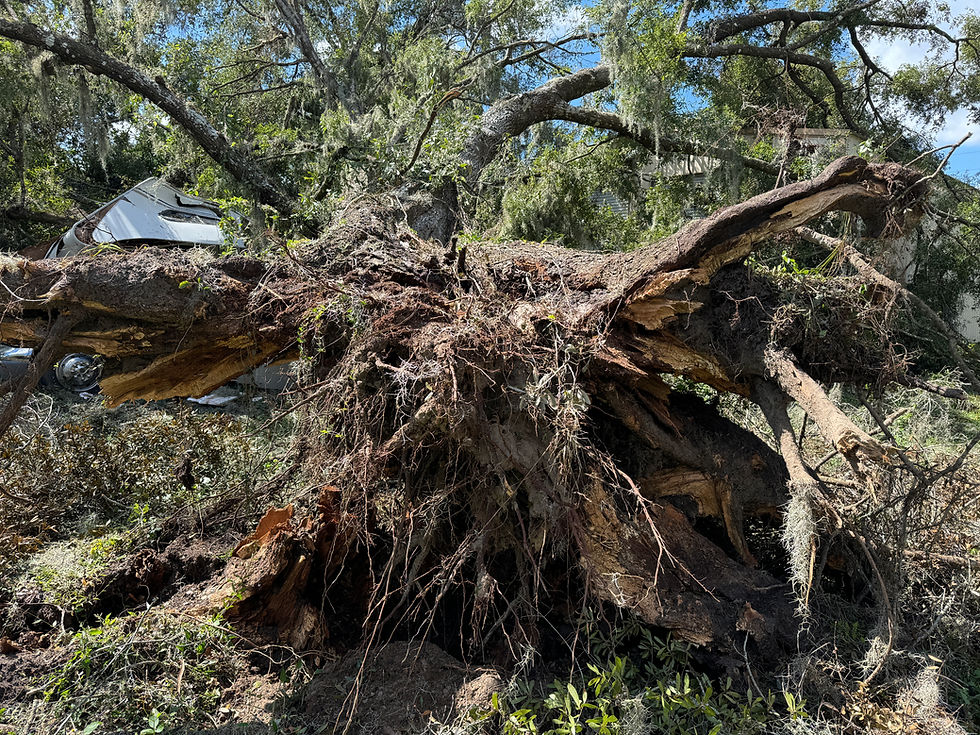
Roots that used to be covered are suddenly visible.
A tree may even look like it is sitting higher in the ground than it did before.
Seeing tree roots above the soil can make homeowners nervous, especially when those
roots appeared after a storm.
Does it mean the tree is falling?
Is the tree damaged?
Should the roots be covered again?
Can you cut them if they are in the way?
The answer depends on what changed, how much soil moved, and whether the tree is showing other warning signs.
Some surface roots are normal. Many trees naturally grow roots near the top of the soil.
But roots that become newly exposed after heavy rain may point to erosion, drainage
problems, soil movement, or a tree that is beginning to lose support.
If you live in Seffner or nearby areas like Brandon, Valrico, Plant City, Riverview, Dover,
Thonotosassa, or Mango, exposed roots deserve a closer look during rainy season.
The roots may be telling you something important about what is happening
underneath the tree.
Some visible roots are completely normal
Not every visible root means the tree is in danger.
Large trees often have roots growing close to the surface. Over time, those roots may
become easier to see as the tree grows, soil settles, grass becomes thinner, or light
erosion occurs.
Normal surface roots are usually firm, established, and partly connected to the
surrounding soil. The tree may have looked this way for years without leaning, shifting,
or dropping branches.
The concern begins when something changes suddenly.
You may notice:
Roots that were not visible before the storm
Soil washed away from one side of the tree
A gap opening near the trunk
Roots lifting with the surrounding ground
The tree leaning more than before
Cracks forming through the soil
Water flowing around the base
Mulch or grass pulled away from the root area
New changes matter more than roots that have always been visible.
Heavy rain can wash soil away from roots
During strong rain, water can move across the yard with more force than homeowners realize.
If the property has low areas, slopes, compacted soil, blocked drainage, or bare ground, water may carry soil away from the base of trees.
This can leave roots exposed.
The roots may still be stable, but they now have less soil around them. If erosion
continues through repeated storms, more of the root system may become uncovered.
Look for signs of erosion such as:
Channels where water moved through the yard
Soil collected at the bottom of a slope
Mulch washed into another area
Bare roots that appeared recently
Grass pulled away from the tree
Mud collecting near fences or drains
Small holes around roots
Soil missing from one side of the trunk
A little soil movement may be manageable.
Ongoing erosion around a large tree needs attention.
Exposed roots and lifting roots are not the same thing
This difference is important.
An exposed root may simply have lost some soil covering because of erosion.
A lifting root may mean the tree itself is moving.
When roots lift, the surrounding soil often rises with them. You may see a mound
forming on one side of the tree. Grass may pull apart. Cracks may spread through the
yard. The trunk may lean in the opposite direction.
Root lifting is more urgent than simple exposure.
Warning signs include:
Soil rising on one side of the trunk
Roots pulling upward from the ground
A gap near the base
Fresh cracks around the root area
The trunk leaning more after rain
The ground moving when the tree sways
Roots breaking through the surface suddenly
The canopy shifting toward a structure
If roots are lifting and the tree is leaning toward your house, driveway, pool cage, fence, garage, or neighbor’s property, call for help immediately.
Saturated soil can reduce root support
Tree roots depend on the surrounding soil for support.
When the ground stays soaked, the soil may not hold the roots as firmly. A healthy tree
with a strong root system may handle wet weather well. A tree with decay, damaged
roots, shallow rooting, or a heavy canopy may struggle.
This is why exposed roots after heavy rain should be considered together with the rest
of the tree.
Ask:
Is the tree leaning?
Are roots lifting?
Is water sitting around the trunk?
Does the soil stay soft for days?
Are mushrooms growing near the base?
Has the tree dropped large limbs before?
Was the root area damaged by construction?
Is most of the canopy on one side?
Is the tree close to something it could damage?
Did the change happen suddenly?
One exposed root may not be the main problem.
The combination of exposed roots, soft soil, leaning, and trunk damage is much more concerning.
Watch for a new lean
A new lean is one of the clearest warning signs that exposed roots may be connected to tree movement.
Some trees naturally lean and have stayed that way for years.
A tree that changes position after heavy rain is different.
Compare the tree with older photos if you are unsure. Look at pictures of the yard,
home listing photos, family photos, or security camera footage.
Check whether:
The trunk angle has changed
Branches are closer to the roof
The canopy is leaning toward the driveway
The tree is closer to a fence or pool cage
Soil is lifting on the opposite side
Roots are showing where they were previously covered
The tree moves during light wind
A newly leaning tree should not be pushed upright, tied to another tree, or attached to a vehicle.
The root system needs to be evaluated first.
Exposed roots can be damaged by lawn equipment
Once roots become visible, they are more likely to be hit by lawn equipment.
Mower blades, string trimmers, edgers, vehicles, and heavy equipment can damage
exposed roots. Repeated impact can remove bark, cut into the root, or create wounds
that affect the tree over time.
Avoid mowing directly over large roots.
Do not cut them simply because they make the grass uneven.
Protect the root area from:
Mower blades
String trimmers
Heavy vehicles
Trailers
Construction equipment
Soil compaction
Repeated foot traffic
Digging
Fence installation
Trenching
A damaged root may not create an immediate visible problem, but the tree may become less stable or begin declining later.
Do not cut exposed roots without an evaluation
An exposed root may be inconvenient.
It may lift a section of lawn.
It may sit near a walkway.
It may grow beside the driveway.
It may interfere with a new fence or landscaping plan.
But cutting a major root can affect tree stability.
Large roots help anchor the tree. Removing one close to the trunk can weaken support, especially if the tree is already leaning or growing in saturated soil.
Before cutting a root, consider:
How large the root is
How close it is to the trunk
Whether the tree already leans
Whether other roots are damaged
Whether the root supports the side facing the wind
Whether the tree is close to the house
Whether construction is planned
Whether erosion has already exposed more roots
The closer and larger the root, the more careful you should be.
Do not bury roots under a thick layer of soil
When roots become exposed, many homeowners want to cover them immediately.
A thin layer of appropriate material may be useful in some situations, but piling heavy soil over roots or against the trunk can create new problems.
Do not bury the lower trunk.
Do not cover the root flare.
Do not pile mulch high against the bark.
Do not add several inches of dense soil without understanding how it will affect
drainage and oxygen around the roots.
If erosion removed soil, the right solution may involve correcting water flow, protecting
the area, adding light material gradually, or adjusting the surrounding landscape.
Simply covering everything can hide the warning signs without solving the cause.
Mulch can help when it is placed correctly
Mulch can protect surface roots from mower damage and reduce soil drying.
It should be spread in a wide, even layer around the root area while leaving space around the trunk.
Good mulch placement can help:
Protect roots from lawn equipment
Reduce soil erosion
Hold moisture more evenly
Reduce grass competition
Keep people from walking directly over roots
Make the area easier to maintain
Avoid piling mulch against the trunk.
The base of the tree should remain visible so changes in the roots, trunk, and soil can still be noticed.
Look for drainage problems nearby
Exposed roots may be a tree problem, but they may also be part of a larger drainage issue.
Walk the property after rain and watch where the water moves.
Look for:
Water flowing directly toward the tree
Downspouts emptying near the roots
Standing water around the trunk
Soil washing toward a fence
Drainage paths blocked by debris
Low areas that stay muddy
Water moving from a neighboring property
Erosion around a driveway
Bare soil under the canopy
Yard grading that directs water toward the tree
If water keeps washing soil away, the exposed roots will continue getting worse until the drainage issue is addressed.
Trees near ditches and drainage areas need special attention
Trees growing near swales, drainage ditches, retention areas, ponds, and low sections of the yard may experience changing soil conditions during heavy rain.
The soil can become saturated quickly. Flowing water may remove material from around the roots. One side of the root system may stay wetter than the other.
Check these trees for:
Soil erosion near the water side
Exposed roots
A lean away from the wet area
Cracks in the bank or soil
Roots hanging over washed out ground
Dead branches appearing in the canopy
Water cutting deeper channels near the tree
The trunk moving during wind
A tree beside a drainage area may have fewer visible targets, but it can still damage fences, roads, neighboring land, or nearby structures if it fails.
Mushrooms near exposed roots can be a warning sign
Mushrooms do not always mean a tree is dangerous.
But fungal growth near the trunk or major roots deserves attention, especially when
roots are exposed after rain.
Mushrooms may be connected to decaying organic matter in the soil. They may also be
growing around damaged or decaying wood.
Be more cautious when mushrooms appear with:
A new lean
Soft wood near the base
Cavities
Missing bark
Root lifting
Dead branches
A hollow sound in the trunk
Repeated limb failure
Soil movement
A tree close to the home
A professional can help determine whether the fungal growth is harmless or connected to a larger problem.
Exposed roots near sidewalks and driveways create two concerns
Roots near pavement can create a maintenance problem and a tree health problem at the same time.
The root may lift concrete or pavers. Homeowners may want the root removed to
flatten the surface. But removing a major root may affect the tree.
Before making repairs, consider both sides.
Possible options may include:
Adjusting the walkway
Replacing a small pavement section
Changing the path
Protecting the root area
Evaluating whether the tree is safe to keep
Removing the tree if the conflict cannot be managed safely
The right answer depends on the size, location, health, and structure of the tree.
Do not let someone cut major roots without considering what that could do to the tree above.
Exposed roots near fences can create neighbor concerns
Roots may become visible along fence lines after soil washes away.
They may lift posts, interfere with gates, or expose tree movement that affects both properties.
Check for:
Fence posts leaning near roots
Gates no longer closing
Soil washed away under panels
Roots growing across the property line
A tree leaning toward the neighbor
Cracks spreading along the fence
Water flowing between properties
Branches hanging over the same area
Document the condition and speak calmly with the neighbor when the issue may affect both yards.
The earlier everyone understands the problem, the easier it is to plan the next step.
When exposed roots may only need monitoring
You may be able to monitor the tree when:
The roots have always been visible
The tree is not leaning
No soil is lifting
The trunk is stable
Water does not collect around the base
There are no major cracks
The canopy looks healthy
The roots are not damaged
The tree is not close to a structure
Erosion has stopped
Take photos and check the area after future storms.
Monitoring should still include protecting the roots from mower and construction damage.
When professional evaluation is needed
Schedule an evaluation when:
Roots became exposed suddenly
Soil washed away from the trunk
The tree has a new lean
Roots are lifting
Cracks are spreading through the soil
Mushrooms are growing near the base
The tree is close to the home
The trunk has visible damage
The tree lost a large limb recently
Water stays around the roots for days
Construction damaged the root area
The tree moves at the base during wind
When exposed roots may point to an emergency
Call emergency tree service when exposed roots appear with signs that the tree may be failing.
That includes:
The tree leaning suddenly
The root plate lifting
The trunk cracking
The tree moving in light wind
Large branches hanging overhead
The tree leaning toward power lines
The tree threatening the house
A driveway or entrance at risk
The ground opening around the trunk
Multiple roots pulling out of the soil
Keep people, pets, and vehicles away from the fall area while waiting for help.
When removal may be the safer choice
Exposed roots do not automatically mean the tree needs removal.
Removal may need to be discussed when the root system is badly compromised and
the tree cannot be stabilized safely.
That may include:
Major roots pulling out of the ground
A severe new lean
Extensive erosion around the root system
Advanced root decay
Trunk damage
Repeated movement after rain
The tree threatening a structure
Construction damage to major roots
The tree already losing large limbs
Trimming will not reduce the risk
A damaged root system cannot always be fixed by cutting branches from the top.
What not to do
Do not cut large exposed roots without professional guidance.
Do not pile soil against the trunk.
Do not cover the root flare.
Do not drive heavy equipment over roots.
Do not park vehicles under a newly leaning tree.
Do not ignore soil lifting after rain.
Do not fill erosion channels without addressing water flow.
Do not damage roots with lawn equipment.
Do not assume exposed roots are harmless when the tree is moving.
Do not wait through another storm if the tree appears unstable.
A simple exposed root checklist
After heavy rain, ask:
Were these roots visible before?
Did soil wash away?
Is the tree leaning?
Are roots lifting?
Are there cracks in the ground?
Is water pooling near the trunk?
Are mushrooms growing near the base?
Did construction damage the area?
Could the tree hit a structure?
Does the tree move during light wind?
If several answers raise concern, schedule a professional inspection.
Final thoughts
Exposed roots after heavy rain do not always mean a tree is about to fall.
Sometimes surface roots are normal. Sometimes rain simply washed away a little soil.
The warning comes when exposed roots appear with erosion, lifting soil, cracking
ground, trunk damage, standing water, or a new lean.
In Seffner, wet soil and repeated storms can change tree conditions quickly.
Look at what changed.
Protect the roots from damage.
Watch how water moves through the yard.
Do not cut large roots without guidance.
Keep mulch away from the trunk.
Call for help when the tree is leaning, lifting, or moving.
The roots may be underground most of the time, but they are still the foundation of the
entire tree.
Call to action
If heavy rain exposed tree roots, washed soil away, or caused a tree to lean on your
Seffner property, schedule a professional evaluation before the next storm. Catching
root and soil problems early can help prevent tree failure, emergency removal, and
damage to your home, driveway, fence, or pool cage.


Comments